Inquire Now to
Get FREE Registrations

4.5 /5 Star Rated Preschool in Yelp
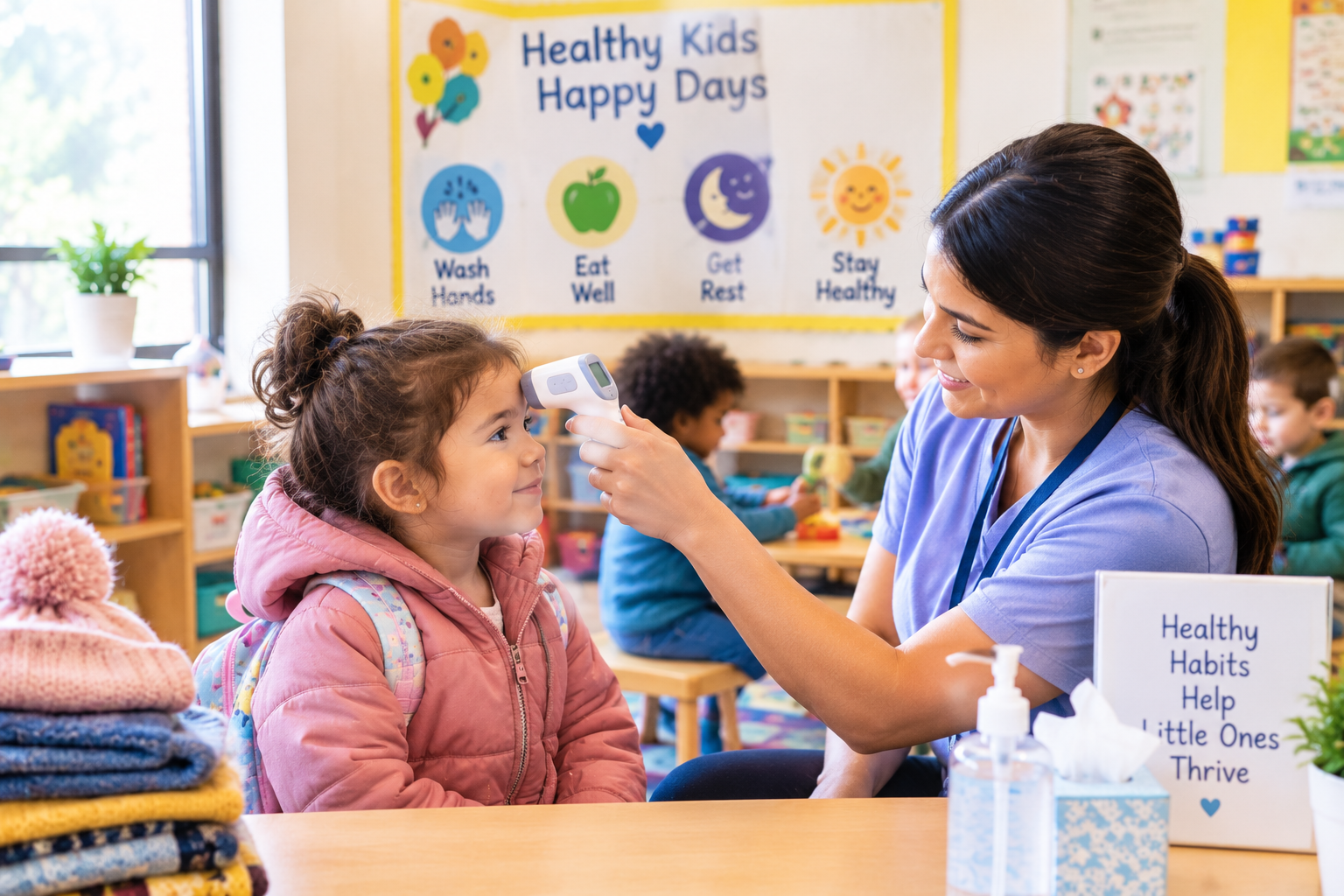
Every parent knows the routine. The weather cools down, school gets going, and suddenly the runny noses start. If your little one is in group care, it can feel like they catch every bug going around. That is normal, and it does not mean something is wrong with the school.
Still, you have every right to ask how a program protects your child’s health. Whether you are comparing an escondido preschool, looking at daycare in Fontana CA, or checking out daycare La Puente options, this guide shows what a healthy classroom looks like and what you can do at home to help.
Toddlers and preschoolers are still building their immune systems. They also touch everything, share toys, put things in their mouths, and hug their friends all day. Germs spread easily in that kind of setting.
Here is the good news. Most of these colds are mild, and many doctors say early exposure helps a child’s body learn to fight germs over time. The goal is not a germ free classroom, because that is not possible. The goal is a clean, well run space that keeps the spread as low as it can be.
A good program builds health habits into the day, so it never feels like extra work. Here are the things to look for.
Regular handwashing. Kids should wash their hands when they arrive, before meals, after using the bathroom, and after outdoor play. Teachers should help the little ones and remind the older ones, and turn it into a song or a game so kids actually enjoy it.
Sanitized toys and surfaces. Toys, tables, and shared items should be cleaned often, not just once at the end of the day. Toys that end up in a child’s mouth should be set aside and washed right away.
Fresh air and outdoor time. Time outside helps kids move around, burn energy, and spend less time breathing shared indoor air. Good programs also open windows when the weather allows and keep the rooms well aired out.
Clear rules for sick kids. A strong program has a simple policy on when a child should stay home, such as with a fever or certain symptoms, and explains it to parents at enrollment. This protects every child in the room, including yours.
Small groups. Smaller classrooms mean fewer kids sharing the same space, which can help limit how fast a bug travels from child to child. This is a good thing to ask about when you compare any daycare in Fontana CA.
Schools do a lot, but parents play a big part too. A few simple habits make a real difference.
Keep a steady sleep schedule, because tired kids get sick more easily. Offer plenty of fruits, vegetables, and water. Teach your child to cough into their elbow and wash up when they get home. Talk to your pediatrician about which vaccines are right for your child, including the yearly flu shot for those who are eligible.
It also helps to keep a small change of clothes in your child’s bag, along with any comfort item the school allows. A calm, well rested child usually handles the ups and downs of the season better.
This is the tough one for working parents, because missing work is stressful. But keeping a sick child home is one of the kindest things you can do for the whole classroom. Check your school’s policy, and follow your doctor’s advice about fever, vomiting, and other symptoms.
Having a backup plan helps a lot. Talk with a trusted family member or friend ahead of time, so you are not scrambling on a hard morning.
When you visit a school, do not be shy about asking about health. Good questions include the following.
How often are toys and surfaces sanitized? What is the policy for sick children? How do teachers handle handwashing with toddlers? How much time do kids spend outdoors? How will the school tell parents if something is going around?
A caring program will be happy to answer every one of these. If a school avoids the questions, that tells you something too.
At Leaps and Bounds Preschool, keeping classrooms clean and sanitized is part of the daily routine. Families can visit any location, ask about health practices, and see the classrooms for themselves.
Teachers know each child well, which makes it easier to notice when a little one is not feeling like themselves. And for families comparing daycare La Puente options, a quick tour is the best way to see how a real day runs.
Reading about a clean, caring classroom is one thing. Seeing it is another.
Call your nearest Leaps and Bounds location today or visit the website to schedule a free tour. Ask any health question you like, and meet the teachers who will care for your child.
Yes. Young kids are around many other children and are still building their immune systems, so frequent colds are common, especially in the first year of group care.
Good programs use regular handwashing, frequent sanitizing of toys and surfaces, outdoor time, and clear rules about keeping sick children home.
Follow your school’s policy and your doctor’s advice. Fever, vomiting, and other clear signs of illness are common reasons to stay home.
Ask how often toys are sanitized, what the sick child policy is, how handwashing is handled, and how parents are told when something is going around.
Yes. Leaps and Bounds welcomes parents to schedule a free tour and see the classrooms in person.